
About Board Certification
Are All Orthodontists Board Certified?
No. All orthodontists must be licensed to practice, but not all choose to become board certified.
Board certification through the American Board of Orthodontics (ABO) is a voluntary achievement that goes beyond the additional two to three years of specialized orthodontic training. It represents a higher level of commitment to excellence in patient care.
To earn board certification, an orthodontist must:
- Demonstrate real patient results through detailed case reports
- Be evaluated by a panel of experienced, board-certified orthodontists
- Show advanced clinical knowledge, skills, and judgment
This process ensures a high standard of care and professional accountability.
How Many Certifying Boards Are Recognized by the American Dental Association in Orthodontics?
One.
The American Board of Orthodontics (ABO) is the only certifying board in orthodontics recognized by the American Dental Association. Founded in 1929, it is the oldest specialty board in dentistry.
The ABO’s mission is to elevate the quality of orthodontic care by promoting excellence through:
- Certification
- Continuing education
- Professional collaboration
Why Would an Orthodontist Choose to Complete This Voluntary Certification Process?
Board certification demonstrates an orthodontist’s commitment to providing the highest level of care to their patients.
Orthodontists who pursue certification show:
- A dedication to excellence in orthodontic treatment
- A strong foundation of knowledge and clinical expertise
- A commitment to staying current with advancements in patient care
For many, it represents both a professional milestone and a personal commitment to delivering outstanding results.
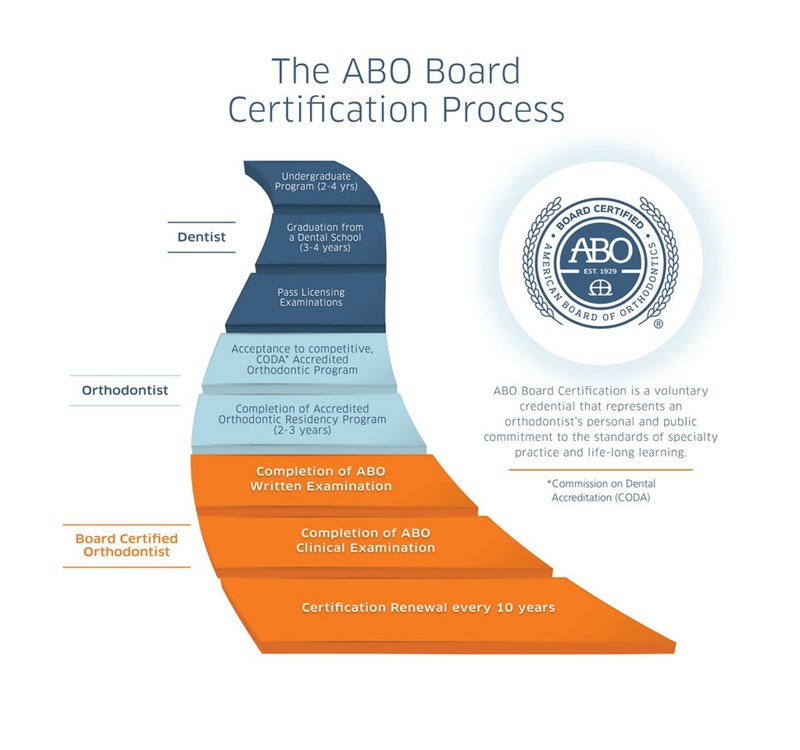
What Steps Are Required to Complete the ABO Certification Process?
The certification process has evolved over time to meet the growing demands of the orthodontic specialty. Today, it includes multiple stages designed to evaluate both knowledge and clinical performance.
The process includes:
- Written Examination
A comprehensive exam with approximately 240 questions covering all areas of orthodontic knowledge - Clinical Examination
Submission of detailed patient case reports demonstrating successful treatment outcomes - Oral Examination
A discussion with a panel of examiners to evaluate clinical decision-making and expertise
After successfully completing all phases, the orthodontist earns board certification.
Board certification is not permanent. Orthodontists must complete recertification every 10 years to maintain their status, demonstrating continued excellence in patient care and ongoing professional development.